
Natural sights - Page 3
27 results Sort :
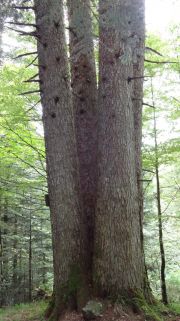
The legend tells that four brave men, wich fought in the Thirty Years War, died after being tied at the bottom of this fir. It was cut at man's height and grew in four branches ...
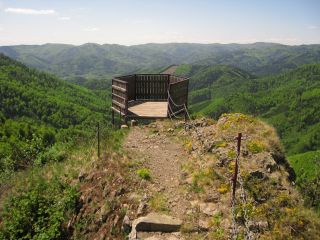
The Fuchsfelsen ledge was created to allow a panoramic view of the Doller valley and the Ballon d'Alsace.
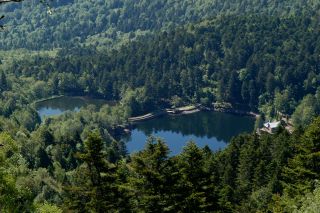
Both of the Neuweiher lakes are the result of glacier activity. Throughout their history, the lakes were drained and used as a meadow. Then the dikes were built again for the needs...
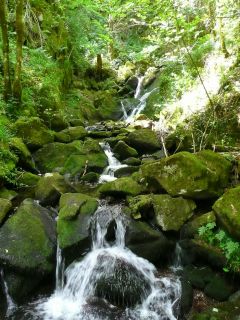
The enchanted cascade Saint-Nicolas is hidden above the village Kruth and has its name from the chapel next to it.
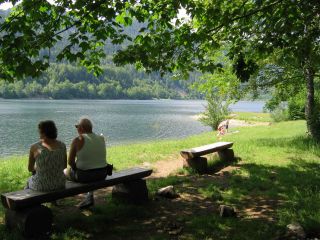
At Lake Kruth-Wildenstein young and old may enjoy water sports and nature activities, such as the tree climbing. Above the lake thrones the ruins of Schlossberg (castle hill) ...
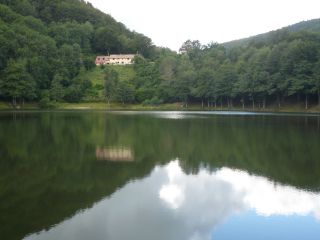
The Lachtelweiher is the most southern lake of the Vosges. According to geologists the rocks that form the natural dam of the lake came from a landslide.
According to a legend, ...
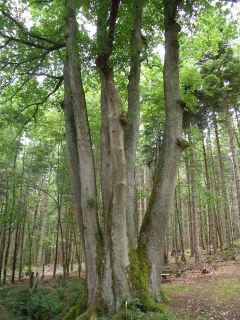
The tree with the six truncs lies nearby crossroad Diebolt Scherrer between Thann and the Farm-lodge Buissonnets. This type of tree with multiples trunks is caracteristic of the ...